JM Belgrade Impact Report

Impact Report International Jeunesse Musical Competition Belgrade

1971–2025

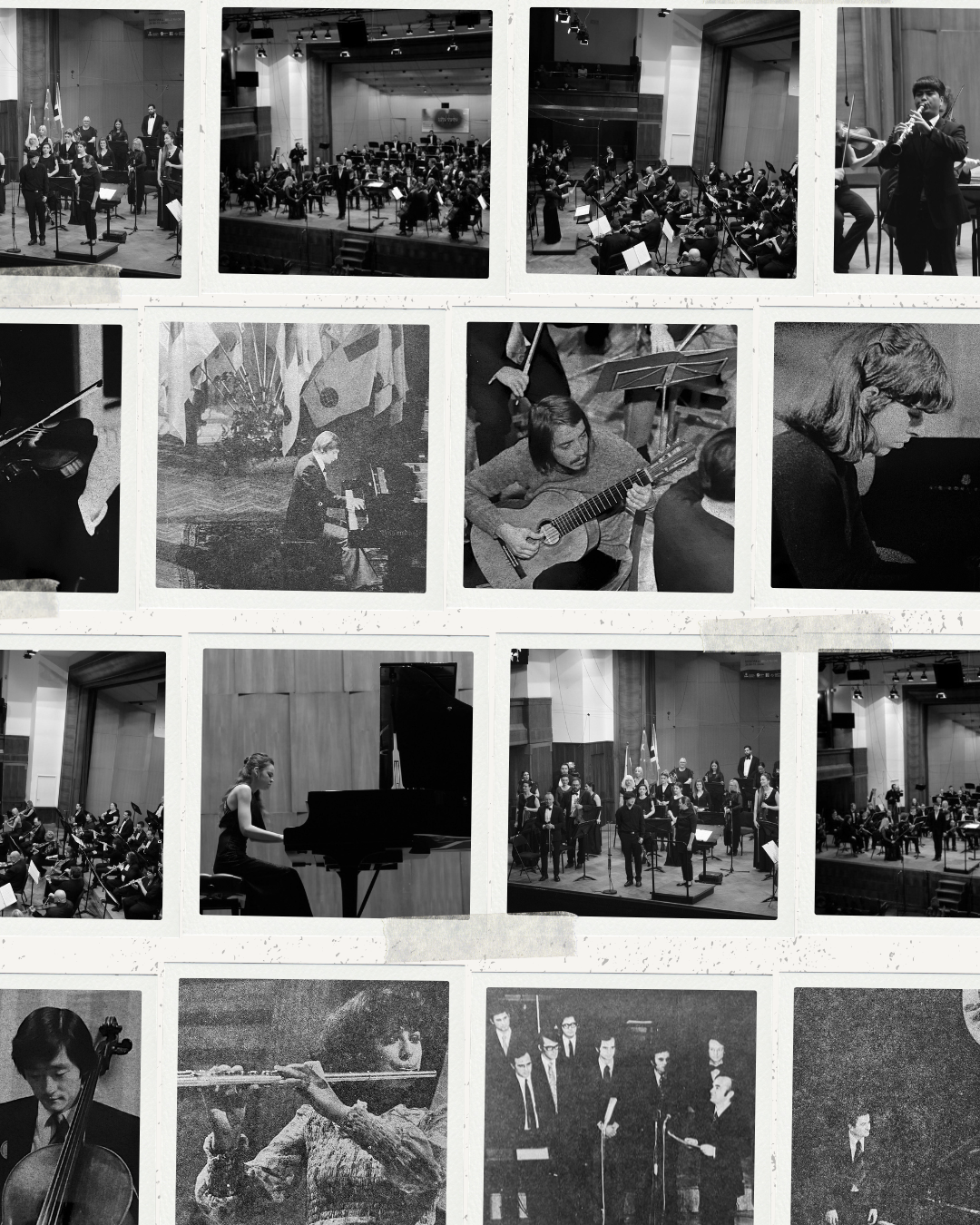
Since 1971, the International Jeunesse Musical Competition Belgrade has created a platform for young musicians from around the world, connecting performance, artistic excellence, international exchange and the promotion of domestic music.

By the Numbers

A clear overview of the scale and legacy of the competition.

2259
Total Competitors
On stage across all editions
52
Editions Held
Not held: 2021, 2022, 2025; interrupted: 1999
17
Competition Categories
Solo, chamber, vocal, ensemble disciplines
401
Chamber Musicians
In chamber ensembles
123
Chamber Ensembles
Quartets, trios, and larger groups
70+
Countries Represented
International participation and exchange

Laureates

74 outstanding young musicians recognised and supported.

Competition Categories

Across its history, the competition included solo, chamber, vocal, compositional and ensemble disciplines. This diversity allowed the competition to support different forms of musicianship, from individual artistic expression to collective performance and ensemble culture.

Solo Disciplines

Number of competitors across solo instrumental and vocal categories.

Pianists
414
414
Violinists
353
353
Cellists
336
336
Solo Singers
244
244
Clarinetists
227
227
Flutists
102
102
Guitarists
71
71
Oboists
49
49
Violists
26
26

Domestic Music on the International Stage

Supporting Domestic Composers

At every edition of the competition, participants performed a required work by a domestic composer. Through this long-term practice, the competition became an important platform for the international presentation of domestic music. Across the competition's history, 91 works by 60 different domestic composers were performed by young musicians from more than 70 countries.
81
Works by Domestic Composers
52
Domestic Composers
IJMC Belgrade

History & Key Milestones

From conception to legacy: The journey of the competition.

1969–1970
The Foundation: Music Youth JM Serbia is tasked with organising an international competition. The idea is approved at the JM International AGA in Budapest (1969) and the project is approved in Copenhagen (1970). The Organising Committee is formed, headed by Aleksandar Pavlović.
1971
The Beginning: The first International Jeunesses Musical Competition Belgrade is held in three disciplines: violin, clarinet and string quartet. The first winners are Gottfried Schneider (violin), James Campbell (clarinet) and Moscow Quartet (string quartet). Aleksandar Pavlović enters into correspondence with the World Federation of International Music Competitions (WFIMC) in Geneva.
1974
Federation Recognition: On 14 February 1974, WFIMC officially informs Music Youth JM that the competition has become a member of the Federation. Notable winners emerge: Dušan Bogdanović (guitar) and Irena Grafenauer (flute).
1975–1984
Expansion & Evolution: The competition grows with new winners each year. Mineo Hayashi (1975), Ina Joost (1978), Helen Jahren (1981), and Natalia Trul (1983) win in their respective categories. Composition is introduced as a category in 1979, and viola in 1982.
1987
Peak Participation: The most attended edition in the competition's history is held, with 101 clarinetists applying. Joan Enric Lluna wins the clarinet category.
1993–1997
Continuing Legacy: Milena Kitić becomes the first solo singing winner (1993). Martin Löhr (1995) and Mate Bekavac (1997) continue the tradition of excellence.
1999
Interruption: The competition is interrupted due to war circumstances in the region.
2012–2024
Resumption & Continuation: After recovery, the competition resumes. Stojan Krkuleski (2012), Nazar Fedyuk (2016), and Hongyi Jiang (2024) win in their categories. In 2019, at the JM International AGA in Suzhou, the importance of the competition is highlighted. The 2022 edition features violoncello, with Vuk Ovaskainen and Joel Ganiet sharing first place.
2020–2021
Pandemic Pause: The competition is postponed due to the COVID-19 pandemic.
2025–2026
End of an Era: In 2025, the competition is cancelled due to lack of funding and political turmoil. On 22 January 2026, the Secretariat for Culture of the City of Belgrade informs Music Youth JM that it can no longer be the organiser of the competition, marking the end of a 55-year legacy.

Legacy

The International Jeunesse Musical Competition Belgrade was more than a competition. It was a meeting point for generations of young musicians, a platform for international exchange and a space where domestic music reached performers and audiences from around the world.